
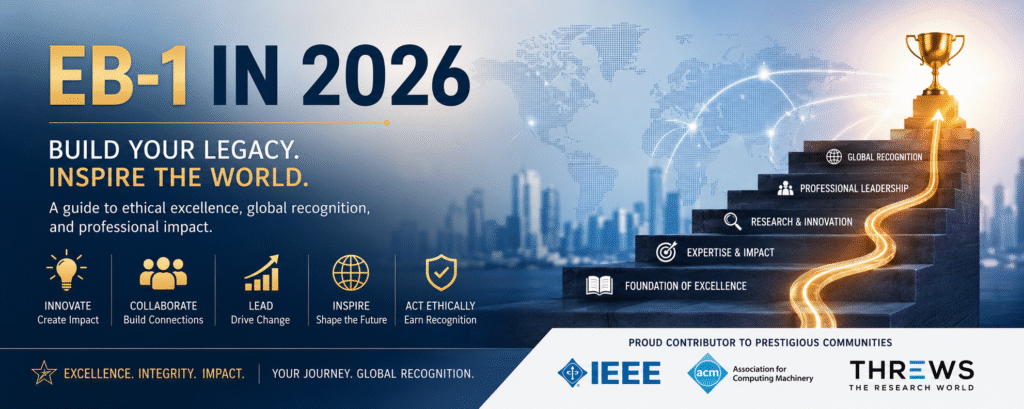
The EB-1 visa category is considered one of the most prestigious U.S. immigration pathways for individuals who demonstrate extraordinary ability, outstanding research achievements, or executive leadership. Managed by the United States Citizenship and Immigration Services, the EB-1 category is designed for professionals whose work has earned sustained national or international recognition.
In 2026, the competition for EB-1 approval has become more sophisticated. USCIS increasingly evaluates not only awards and publications, but also professional credibility, leadership influence, peer recognition, and contributions to the broader research or industry ecosystem.
As a result, ethical professional development has become one of the most important foundations for a strong EB-1 profile.
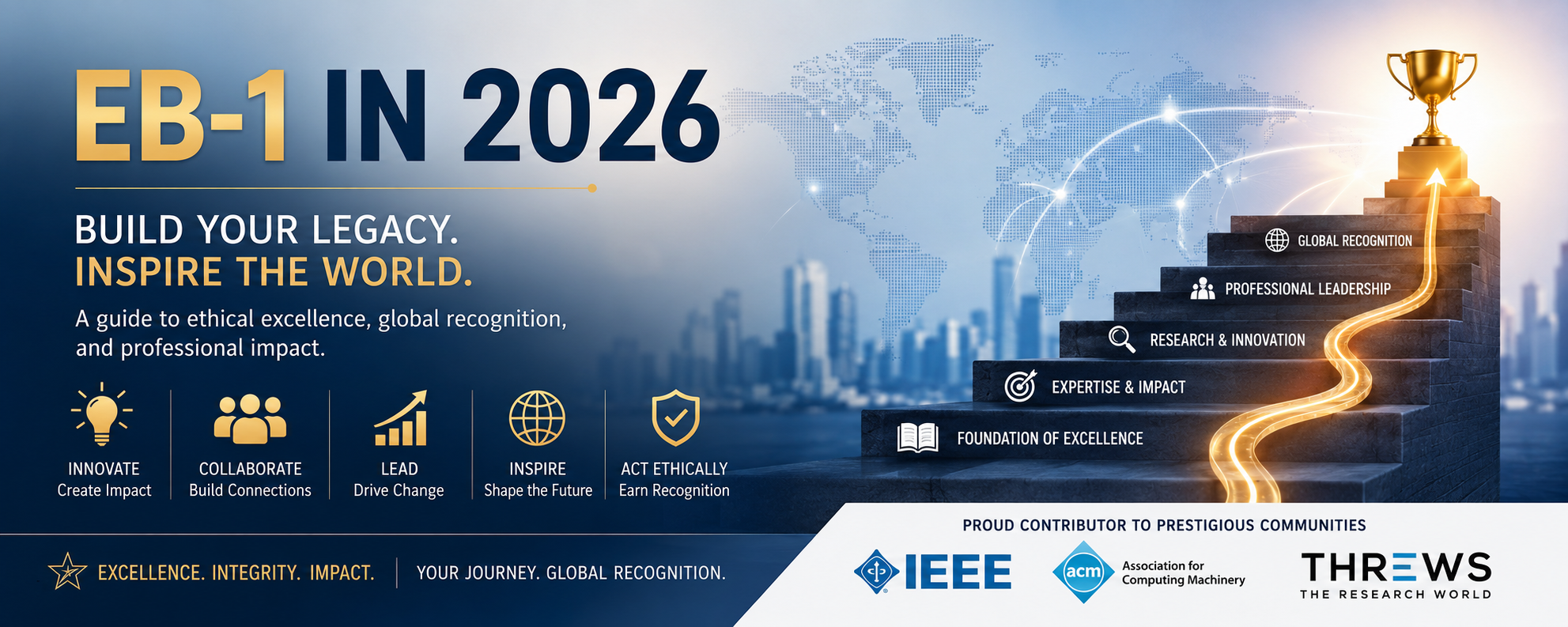
What Makes a Strong EB-1 Profile?
A successful EB-1 profile is usually built through years of meaningful contribution in areas such as:
- Scientific research
- Artificial intelligence
- Cybersecurity
- Healthcare innovation
- Cloud computing
- Engineering
- Business transformation
- Academic leadership
Strong evidence often includes:
- Original contributions of major significance
- Scholarly publications
- Peer review and judging experience
- Conference speaking engagements
- Leadership roles
- Membership in prestigious organizations
- Media recognition
- Patents and innovation impact
However, authenticity matters more than ever. Immigration authorities increasingly scrutinize fabricated achievements, unethical publication practices, and inflated professional claims.
The Importance of Professional Organizations
Professional organizations play a significant role in validating expertise and leadership. Membership and participation in respected organizations can demonstrate that a professional is recognized by peers beyond their employer or institution.
Globally respected organizations such as IEEE and Association for Computing Machinery have long been recognized for advancing technology, research, and professional excellence.
Similarly, Threws – The Research World has emerged as a growing professional and research-focused organization connecting researchers, scientists, innovators, and industry professionals internationally. Founded in 2013, Threws describes itself as a network of experienced professionals and scientists supporting collaboration, research development, conferences, mentorship, and professional recognition.
The organization also supports multiple professional societies and research communities focused on science, technology, innovation, and interdisciplinary collaboration.
For professionals pursuing global recognition, participation in professional organizations can help build:
- Professional networking opportunities
- Leadership visibility
- Conference participation
- Peer collaboration
- Reviewing and judging experience
- Research dissemination
- Community contribution
Ethical Ways to Build an EB-1 Profile
The strongest EB-1 journeys are built ethically through consistent contributions and measurable impact.
1. Focus on Real Contributions
Develop genuine expertise in your field and contribute meaningful solutions to real-world challenges.
2. Publish Responsibly
Prioritize quality research, ethical collaboration, and reputable journals instead of chasing publication volume.
3. Engage With Professional Communities
Contribute to organizations, conferences, workshops, and research initiatives that align with your expertise.
4. Participate in Peer Review and Leadership
Serving as a reviewer, judge, mentor, or committee member demonstrates professional recognition and trust.
5. Avoid Unethical Shortcuts
Practices such as fake awards, purchased authorships, citation manipulation, or fabricated achievements can seriously damage both immigration outcomes and professional reputation.
Beyond Immigration
The EB-1 pathway is not simply about obtaining permanent residency. At its best, it reflects a professional journey built on innovation, integrity, leadership, and global impact.
Professionals who focus on ethical growth, authentic contributions, and active engagement with respected organizations — including communities like Threws – The Research World, IEEE, and Association for Computing Machinery — are often better positioned to establish long-term international recognition and sustainable professional success.